Available 24/7
Currency

In our store, you can easily return most new and unopened products within 30 days after delivery for a full refund.
If the error is on our part (incorrect or damaged product), we also cover the return shipping costs. 🚚✅
The refund will be issued within 14 days after we receive your package.
In most cases, this process is even faster!
Nothing simpler:
DESCRIPTION
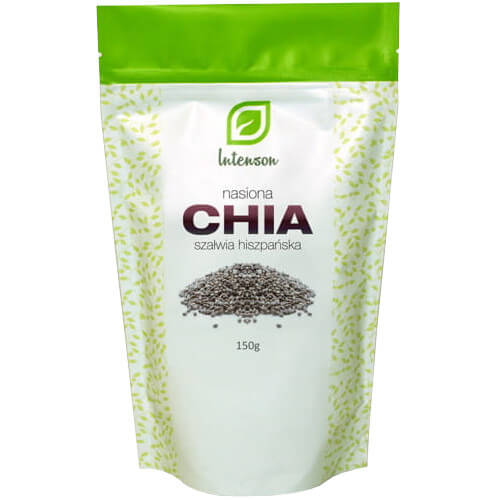
Chia Seeds - Spanish Sage Intenson 150g
-it is an excellent source of polyunsaturated acids
-high fiber content - 26g per 100g of the product
-high protein content
-containing vitamin E, potassium, phosphorus, calcium, zinc, copper and manganese
-easy to prepare and very satisfying
-the product is lightweight and ideal for travel
Chia seeds (Salvia hispanica L.), also known as Spanish sage, are a plant cultivated by the Aztecs as early as pre-Columbian times. Today, the seeds are widely used in the preparation of nutritious foods and drinks. Jesuit chroniclers describe chia as the third most important crop for the Aztecs, after beans and corn. It is cultivated in regions of Mexico and Guatemala. The fruit that produces the sage in the cleft contains seeds. They come in three colors: gray, white, and black.
Spanish sage seeds are also called chia seeds. Sage was one of the staple ingredients of the Aztec diet. It is now highly valued by travelers as a light yet highly nutritious product. It is increasingly becoming an ingredient in healthy desserts, porridge, fruits, cakes, and as a complement to bread.
Chia seeds contain up to 35% fat, primarily polyunsaturated fats. The fatty acids found in them are alpha-linolenic, palmitic, linoleic, and oleic acids. Thanks to these, they have a positive effect on memory and concentration. Another 25% of the composition is protein. These are not gluten proteins, so these seeds can be consumed by people who have had to exclude gluten from their diet. They contain amino acids such as arginine, glutamic acid, and aspartic acid. For this reason, they can positively influence the improvement of immunity. In addition, they contain a high content of dietary fiber, approximately 26 grams per 100 grams of product, which speeds up metabolism. They also contain tocopherols, i.e., vitamin E, which has an antioxidant effect, i.e., it fights free radicals in our body. Thanks to this, it boosts our immunity. The minerals contain potassium, phosphorus, calcium, zinc, iron, copper, and manganese. Thanks to all these minerals, chia is an excellent addition to our diet, which will affect calcium supplementation in the bones, improve the quality of our sleep, our concentration, and have a positive effect on the work of our muscles.
Spanish sage seeds can be eaten raw or after pouring water, cow's milk, or vegetable milk. After being poured with liquid, they begin to swell and after leaving them for a few hours, they form a characteristic pudding. Such a meal gives you a quick feeling of satiety that lasts a long time. However, it is worth controlling the amount consumed during the day, mainly due to the high fiber content; if its intake is too high, it will lead to poor absorption of minerals and can even lead to excessive bowel movements.
INTERESTS
Chia in Nahuatl means "oily."
In 100 grams, it contains more calcium (up to 631 mg) than milk and more omega-3 fatty acids than Atlantic salmon. In addition, they are an ideal alternative for vegetarians and vegans to supplement the protein intake of the diet.
Pudding preparation: Add about 8 tablespoons of water to one tablespoon of chia. For the first 30 minutes, stir the seeds several times with water (or another liquid) to loosen them. Then, let them sit for at least an hour, after which the seeds will spread evenly throughout the liquid, creating a pudding-like characteristic.
INGREDIENTS
100% chia seeds.
INSTRUCTIONS FOR USE
Used as an addition to salads, porridge, muesli, boiled porridge, potatoes, and as a garnish for vegetables. Ground chia seeds can be combined with flour to bake cakes, pancakes, puddings, soups, thicken soups, and bake bread. According to the European Parliament Regulation, in January 2013, the use of chia seeds as a food ingredient was expanded. Daily consumption of seeds should not exceed 15g. Chia seeds can be used in baked goods up to 10%.
ALLERGY INFORMATION
They contain traces of sodium.
COUNTRY OF ORIGIN
Bolivia, Mexico, Argentina, Peru.
STORAGE
The product should be stored in its original, tightly closed packaging. Keep away from foreign odors and sunlight.
Get the latest updates on new products and upcoming sales.
Thanks for subscribing!
This email has been registered!